
Surfaces That Handle Heavy Use Economically
Asphalt Millings Installation in Cumberland Valley for commercial properties needing functional surfaces without full paving costs
Immanuel Randolph Paving Inc. installs asphalt millings on commercial properties throughout Cumberland Valley, providing recycled asphalt surfaces for storage yards, access roads, and expansion areas. This approach uses reclaimed pavement materials that compact into durable surfaces while offering better drainage than many traditional options. Commercial property managers and business owners turn to this solution when they need functional vehicle surfaces across large areas where aesthetic appearance takes a secondary role to performance and cost control.
Asphalt millings are recycled asphalt chunks from milled roadways that, when properly graded and compacted, bind together to form a stable surface. The installation process includes site grading to manage water flow, material placement in lifts, and multiple passes with heavy compaction equipment to achieve proper density. Because the material contains residual asphalt binder, it firms up more than loose gravel while maintaining porosity that helps with stormwater management.
Request a site evaluation to determine grading needs and material volume for your specific commercial property application.
What Proper Installation Requires
The preparation phase determines how well millings perform over time. Your site gets graded to create positive drainage away from buildings and toward designated water management areas, which prevents pooling that would otherwise soften the base and create ruts. A stable subgrade is essential because millings compact better on firm soil than on loose or saturated ground. In the Cumberland Valley region, clay-heavy soils often require extra attention to ensure moisture doesn't migrate upward and compromise the base layer.
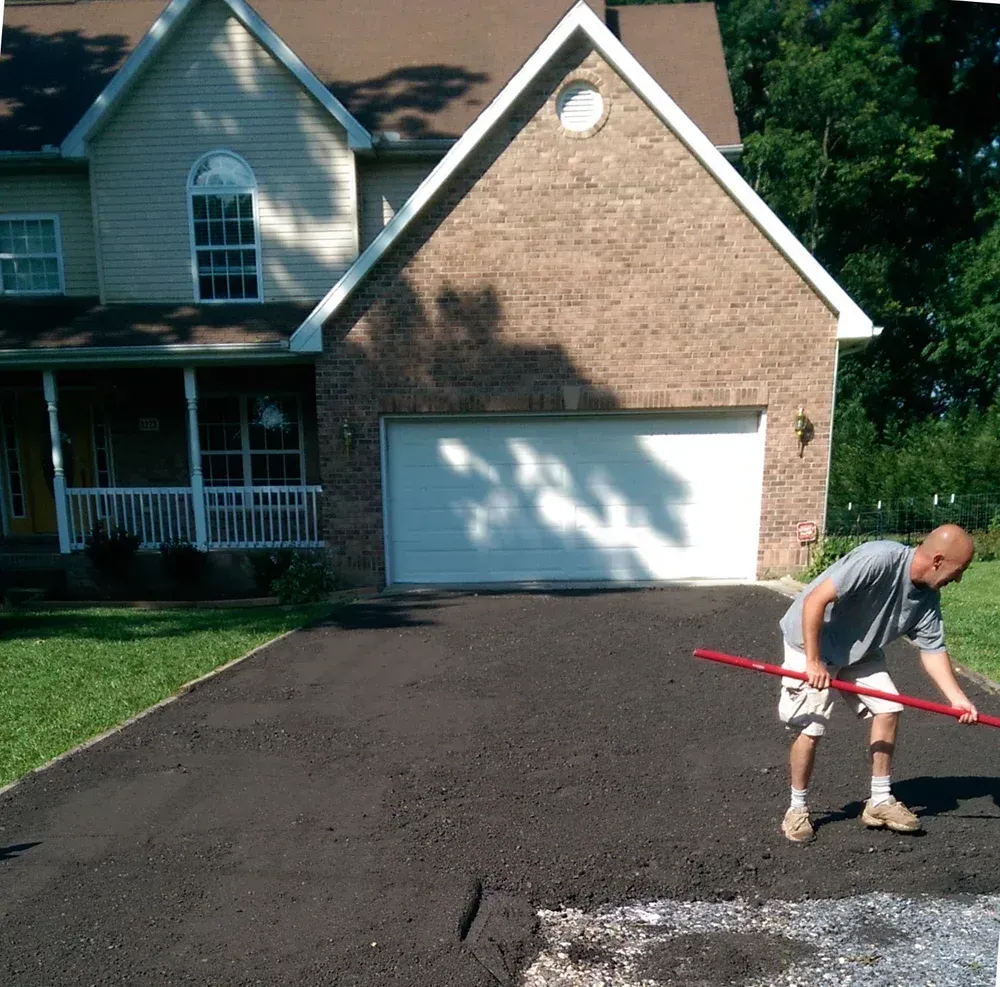
After installation and compaction, you'll notice a firm surface that supports vehicle traffic without the dust and loose material common with gravel lots. The millings lock together under repeated traffic and compaction, forming a semi-permanent surface that handles delivery trucks, equipment storage, and employee parking. Over the first few weeks, the surface continues to firm as vehicles contribute additional compaction and the material settles into its final profile.
Millings work best for lower-traffic commercial spaces, secondary access roads, and areas where appearance standards are flexible. They're not intended for high-visibility customer-facing areas or spaces requiring ADA-compliant smooth surfaces. Property owners typically use millings to extend usable space at a fraction of full asphalt paving costs, then upgrade to traditional pavement if business needs change.
What Commercial Property Managers Usually Ask
Questions about asphalt millings often focus on performance expectations, drainage characteristics, and how the material compares to other surface options for commercial applications.
How do asphalt millings compare to traditional gravel for commercial lots?
Millings compact into a firmer, more stable surface than gravel because the recycled asphalt particles contain residual binder that helps them lock together under traffic and compaction. Gravel remains loose and requires frequent regrading, while properly installed millings resist rutting and displacement better over time.
What type of compaction equipment is used during installation?
Heavy vibratory rollers make multiple passes over the millings in lifts to achieve proper density and surface firmness. The compaction process is similar to that used in road base preparation, ensuring the recycled material binds tightly and creates a stable driving surface.
How does drainage work with asphalt millings compared to solid pavement?
Millings maintain more porosity than solid asphalt, allowing water to filter through the surface rather than pooling on top. This characteristic reduces standing water issues common with impermeable surfaces, though proper site grading still directs bulk water flow away from structures and toward appropriate drainage points.
When is the best time to install millings in the Cumberland Valley area?
Spring through fall provides optimal conditions when the ground is dry and temperatures support effective compaction. Wet soil conditions or frozen ground complicate grading and prevent millings from achieving proper density during installation.
What kind of maintenance does a millings surface require?
Occasional grading smooths any minor irregularities that develop, and adding a thin layer of new millings every few years maintains surface integrity in high-traffic zones. The material doesn't require seal coating like traditional asphalt, reducing long-term maintenance costs for large commercial areas.
Immanuel Randolph Paving Inc. evaluates site conditions and traffic patterns to determine whether asphalt millings fit your commercial property needs. Schedule an on-site consultation to review grading requirements and receive a material estimate based on your specific area dimensions and usage plans.